by Carole Epp | Mar 9, 2014 | call for entry, emerging artist, job posting, monday morning eye candy, movie day, residency opportunity, show us your influences, technical tuesday
The
table is the place where a need becomes a want. Something we have to
do—eat—becomes something we care to do—dine, and then something we care
to do becomes something we try to do with grace. Eating together is the
civilizing act, we take urges and tame them into tastes.
—Adam Gopnik
The
table comes first, then the dishes, food, individuals and conversation.
There is trust and fear that comes with the meal—a trust that with an
honest conversation, knives will not be raised in anger, and a fear that
customs and rituals are not universally understood. Taste is our most
intimate sense, and the table is where we experience it socially. My
studio practice pivots around these notions of the table, and how the
work could bring people back to this place of social intimacy. In the
1880s dinnerware was advertised to women just like high fashion, where
the table was the mannequin that needed dressed. I am pushing ideas of
social iteration at the table through my towers, choreographing the
progression of the meal by stacking the dishes to be unwrapped as a gift
together. By investigating historical meals, I am able to imagine the
choreography of the footmen, who gracefully moved from guest to guest,
and guest to sideboard, and then to consider the modern hostess,
who scrambles to prepare the meal for her guests. These towers replace
the footmen and the frantic host, commenting subtly on such social
implications through their utilitarian attributes. I am using food as a
way of seeing the world, the tableware to create rituals through
decorum, and the table to build camaraderie. As the maker it is my
greatest wish to see these objects in use in the world, although beyond
this notion, my greater desire is through their utility, the necessity
of the table within the home becomes indisputable.
Lindsay Scypta
Clay Art Center 2013-2014 Artist In Residence
by Carole Epp | Mar 8, 2014 | call for entry, emerging artist, job posting, monday morning eye candy, movie day, residency opportunity, show us your influences, technical tuesday
Artist Statement:
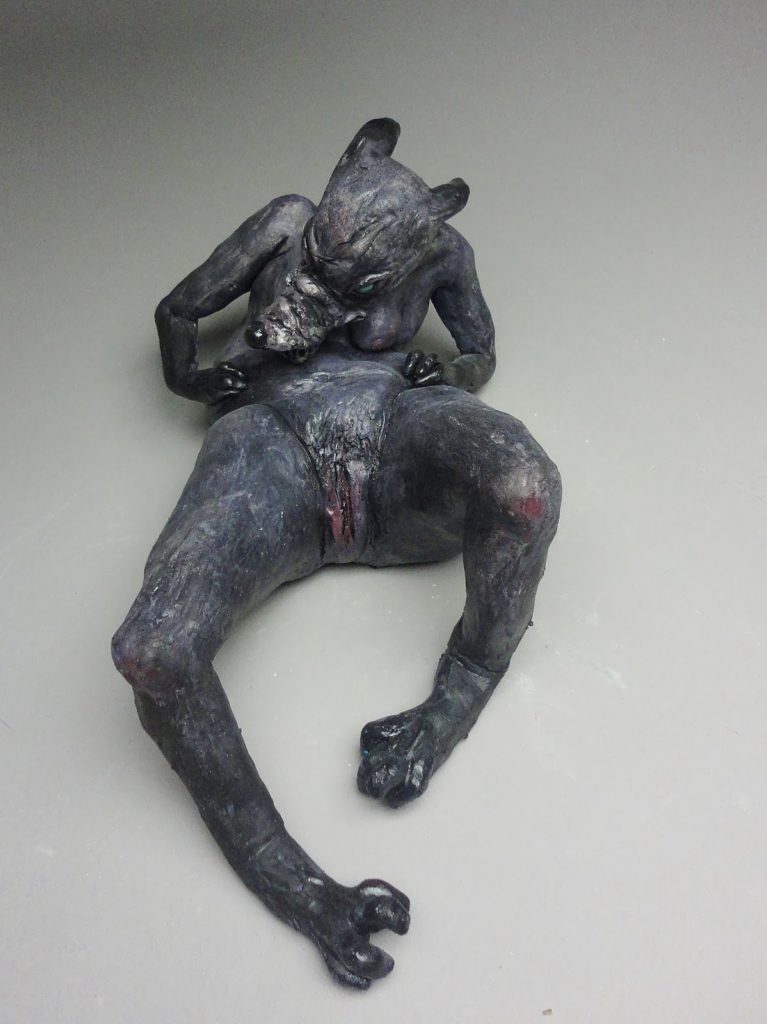
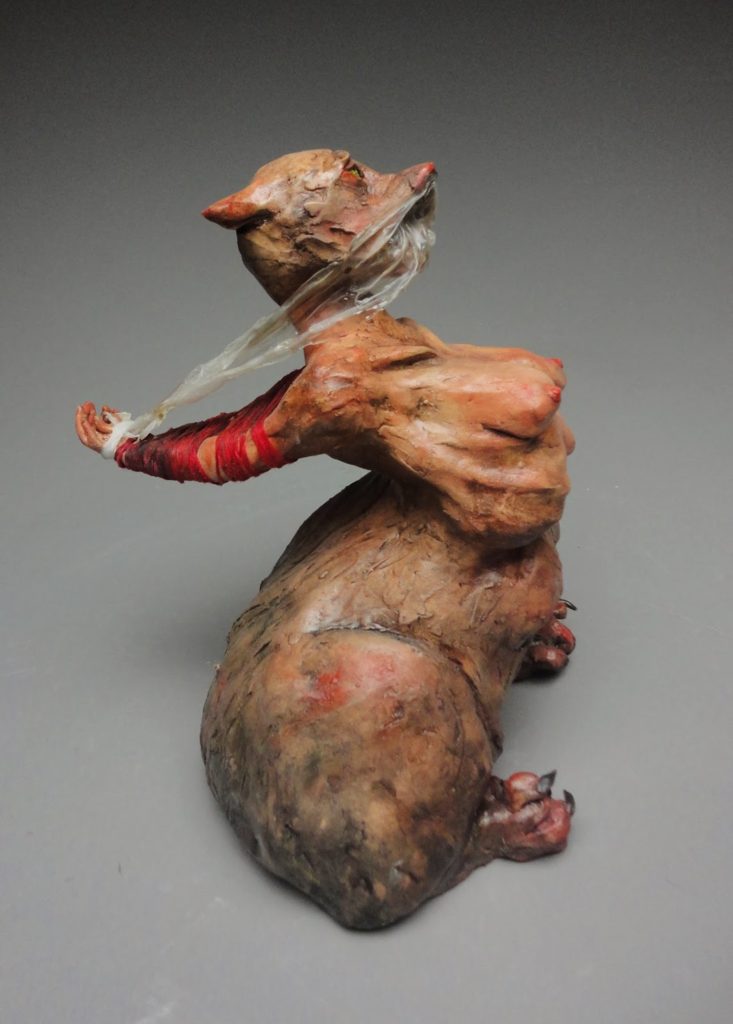
My work is currently exploring Dominant and Submissive personalities in a way that explores sexuality along with storytelling. Who is taking on a role that emits control? Perhaps not whom one would suspect- and what is happening to the forms of these creatures? They are in the process of shifting, of slipping into another identity. Is there a shift in a dynamic where the role that is expected of someone is reversed? What happens to the way they perceive themselves and the way others see them? It also explores emotions that are personal to me, yet universal in experience. Frustration, helplessness, suffocation, love.
by Carole Epp | Mar 2, 2014 | call for entry, emerging artist, job posting, monday morning eye candy, movie day, residency opportunity, show us your influences, technical tuesday
Artist Statement:
As
individuals we endeavor to assert our uniqueness, but in the same
breath ask if our experiences are shared by others. The contact of two
hands, the pull of gravity on sinking form, the small indent of a hidden
smile, I observe the subtle movements in life and through my work, ask
you to do the same.
Just
as we only pick up on tiny gestures when speaking face to face, the
conscious mind has the amazing ability to find meaning in the minuet.
The brevity and physicality of these interactions laden with
significance is fascinating to me and through my choice of format and
material I try to draw attention to the details we often overlook.
In
my most recent work I’ve been exploring the intricacies of human
interaction and our perceptions of each other through the use of the
body. Though the strategies I use to convey ideas vary greatly, there is
always a connecting thread tying human presence to the content.
I
have great interest in studying people from objective point of view and
in turn, make work that allows me to create a platform in which to
observe and engage others. I strive to create work that is likes a
conversation, rich in information, fluid, and fleeting.
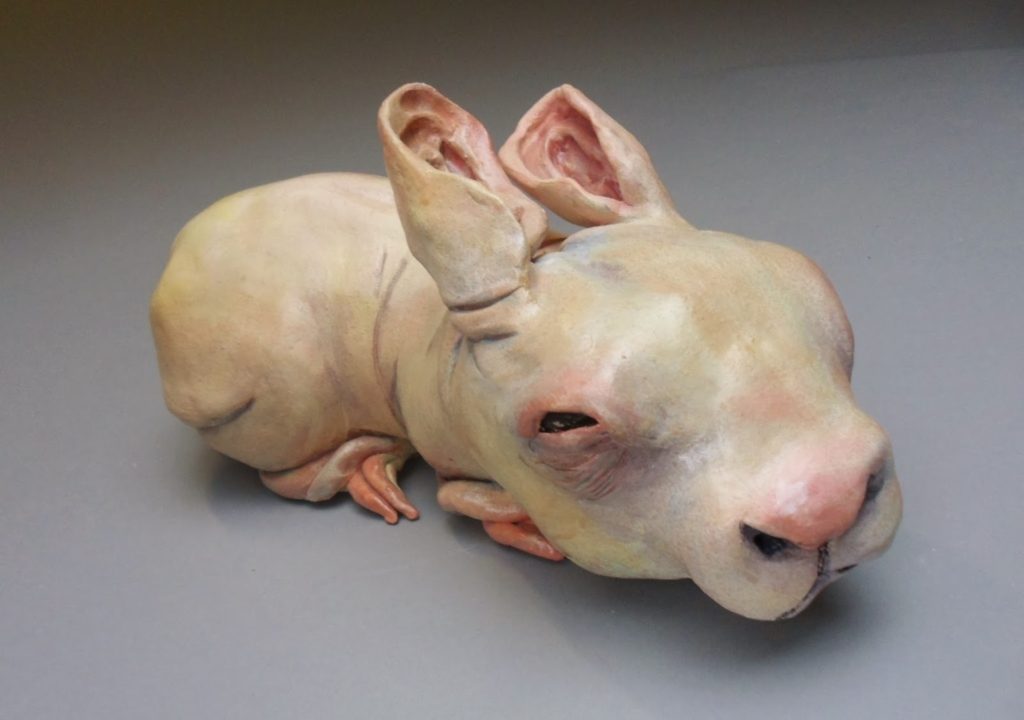
Here is the info for the images. The concepts for the works are explained further on her site.
Untitled (image 1-2)
Year: 2013
Method: Handbuilt
Materials: raw clay, muslin, video projection
Measurements: 7’x3’x3′
The Pygmalion Project (image 3-4) http://www.sarahmcnutt.com/#!pygmalion-project-sarah-mcnutt/cyb8
Year: 2013
Method: Handbuilt and electric fired to cone 04
Year: 2013
Method: Handbuilt and electric fired to cone 04
Materials: Low fire clay, video projection, joint compound
Measurements: Varies according to space installed
by Carole Epp | Feb 23, 2014 | call for entry, emerging artist, job posting, monday morning eye candy, movie day, residency opportunity, show us your influences, technical tuesday
Artist Statement:
People make us happy but also angry and disappointed. People are curious but also foolish. We never seem to learn, despite knowing deep down that we’ve taken others for granted and knowing that we shouldn’t have.
Mayumi’s work deals with our emotions, relationships and everyday-life and incidents with a twist and a hint of humour. Why doesn’t humanity learn from mistakes of the past? Why is it that we create things of beauty but we also destroy them? Why is humanity so “wonderful”? She plays with these questions and creates ceramic sculpture inspired by what we do, what we are and how we live.
She aims to create a fusion between man-made and natural forms and objects in her interpretation of humanity. By adding tiny human figures to these forms, Mayumi’s work offers a unique perspective on humanity:
‘Without the small figures, my work might be just an object but as soon as I put teeny tiny people onto the piece, it starts to tell a story itself. I enjoy playing with it and have been fascinated with how the tiny thing affects whole piece.’
Mayumi’s work is narrative but doesn’t always tell the whole story allowing the audience to project their emotions and ideas into the work and to interpret them in their own way.
‘I’m not trying to shake people’s shoulders and tell them that we should appreciate each other more. My work is nothing like as “noble” as that. I just want to see how the audience interacts with my pieces and how they make up their own stories and how they often seem to giggle. That’s all I want.’
www.mayumi-yamashita.com