Monday Morning Eye Candy – Caroline Swift
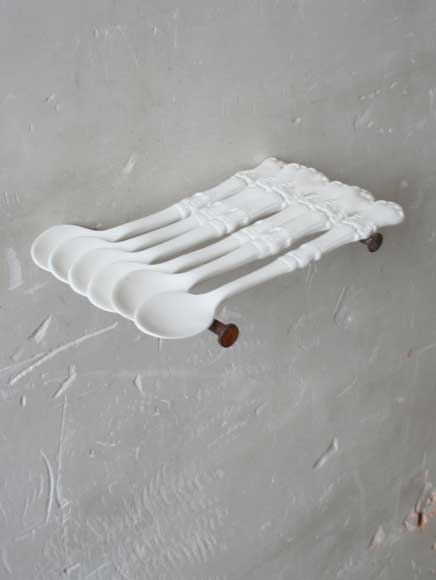

See more here.

See more here.
@font-face { font-family: “Courier New”; }@font-face { font-family: “Wingdings”; }@font-face { font-family: “Cambria”; }@font-face { font-family: “Georgia”; }p.MsoNormal, li.MsoNormal, div.MsoNormal { margin: 0cm 0cm 0.0001pt; font-size: 12pt; font-family: “Times New Roman”; }p.MsoBodyText, li.MsoBodyText, div.MsoBodyText { margin: 0cm 0cm 0.0001pt; font-size: 12pt; font-family: “Times New Roman”; font-weight: bold; }span.BodyTextChar { font-family: “Times New Roman”; font-weight: bold; }div.Section1 { page: Section1; }ol { margin-bottom: 0cm; }ul { margin-bottom: 0cm; } Job Title: Visiting Assistant Professor in Ceramics/Foundations Department: Art Location: University of Arkansas, Fayetteville The Department of Art has more than 360 majors in the areas of Art History, Ceramics, Drawing, Painting, Photo, Printmaking, Sculpture and Visual Design. The department offers the following degrees: B.A. in Studio Art, B.A. in Art History, B.F.A. in Studio Art, B.F.A. in Art Education and M.F.A. in Studio Art. The faculty is made up of 12 tenured and tenure track faculty, 5 non-tenure track faculty, 3 part-time adjuncts and 2 full-time support staff. Major Medical Insurance, Group Life Insurance, Delta Dental Insurance, CAN Long Term Care, Long Term Disability Insurance, TIAA/CREF and/or Fidelity, Social Security. Matching contribution by the university. Posted Date: 1/22/2011 Annual Salary: $45,000 Start date: Aug. 15, 2011 Description: The University of Arkansas is seeking an active studio artist and teacher in the field of ceramics for a non-tenure track position, with the possibility of renewal. Applicants should have a strong commitment to an expanded definition of ceramics, embracing contemporary and traditional techniques from utilitarian pottery to conceptual installation. Applicant should also have a strong background in three-dimensional design and an interest in curriculum development. Requirements:
Job Duties: Teach two classes per-semester, supervise graduate students and adjunct faculty teaching three-dimensional design courses, work with graduate students and advanced ceramics students, manage ceramics studio and equipment, including supervising graduate assistants, and maintain an active research record. Where To Apply? Applicants should send a letter of application, curriculum vitae, artist’s statement, statement of teaching philosophy, list of 5 professional references w/address, phone, email, 20 images of professional work, 20 images of students’ work (all images should be a maximum of 1024 X 768 pixels, RGB, 72 dpi, jpeg), image identification list indicating each image’s description and/or title, dimensions, medium, and date in corresponding numbering to presentation. (Any digital video work should be submitted as QuickTime files.) All materials should be submitted on a CD or DVD and formatted for Macintosh. Please include a stamped, self-addressed envelope if you wish the materials to be returned. Deadline: March 1, 2011 or until position is filled. Materials should be sent to: Jeannie Hulen, Chair, Department of Art 116 FNAR Center University of Arkansas Fayetteville, AR 72701 The University of Arkansas is an Affirmative Action/Equal Opportunity Employer. All applicants are subject to public disclosure under the Arkansas Freedom of Information Act and must have proof of legal authority to work in the United States.
20 June-1 July 2011 as Anadolu University Faculty of Fine Arts Ceramics Department, Anadolu
University, Eskisehir-TURKEY.
The theme of the symposium is to make ceramic artworks by applying overglaze-underglaze paints on particular forms which will reflect the artists’ unique style and techniques. While making overglaze- underglaze paintings, subject and technique will be decided by the artists.
Intention of the symposium is to make the ceramic artists and lecturers of different cultures come together, both from Turkey and from abroad. We believe this will create an ambiance that enables communication by sharing experiences, having the opportunity to discuss techniques and ideas. We hope that artists will get to know each other better and we desire for participants to enjoy international cultural exchange.
You may find the detailed information, application form and the program at
the attachment and at the link below:
http://seramik.anadolu.edu.tr/
Prof.Sibel SEVIM
Head of Ceramics Department
Anadolu University
Faculty of Fine Arts
Eskisehir-TURKEY
tel: 0090 222 3350580/4230
web-site: http://www.seramiksanatevi.com/
email: [email protected]

The Town Council of L’Alcora, announces its call for entries for the 31st Concurs Internacional de Ceramica De L’Alcora 2011, organised by a Commission designated to that effect. All participants are entitled to present a maximum of two works of art created with ceramic materials, which must be original and unique. Entries created by non ceramic procedures, works of an industrial nature or those who have entered in another competitions will not be admitted. Works must not exceed 2 metres long in any of their dimensions. Entries not measuring 30 cm long or wide will not be accepted. Entries must be sent to the Secretaría del Concurso (Museo de Cerámica, C/ Teixidors, 5 – E12110 L’Alcora · Spain) before April 30th, 2010. All entries must include a properly completed application form, and the author or authors’ curriculum vitae. Registration will be able by e-mail [email protected], also attaching the curriculum vitae. A maximum of three images with neutral background (either printed or in jpg format -200 dpi minimum) must be attached to each work of art. The jury will be made up of renowned experts from the world of ceramics. Members will be made public once their final verdict has been announced. Finalist entries must be sent to the L’Alcora Ceramics Museum before May 8th, 2011. Those works who break this term will be excluded from the competition. Finalist entries will be exposed from June 24th until Sept. 11th, 2011. Deadline: March 23rd, 2011
Rules of the Competition (in English): bases_eng
For links and more information regarding the call and images of some interesting ceramic work on their blog: http://concursointernacional.blogspot.com/

By Paul Scott (UK)
April 11th – 15th 2011
Once again Guldagergaard proudly presents Paul Scott and his printmaking course for those with some experience of print and/or ceramics and/or glass. Discover a range of transfer technologies and direct printing or develop a particular aspect of a process or technique.
The “Vitrified Print” courses have formed an important part of the developing knowledge in the field, and are well known for being very informative and hugely enjoyable. Vitrified Print will be structured to encourage the students research interests to take priority over a rigid teaching format. This allows the individuals to develop a technique or process under expert guidance. For those wishing to have a specific program of work, the workshop will concentrate initially on direct drawing – monoprint transfers – then go on to consider the processes of relief and intaglio printing as well as screenprinting and lithography. We will examine the theory of traditional decal production but concentrate on alternative transfer technologies, direct printing and the role of laser printer and photocopier in ceramic and glass transfers.
Emphasis will be placed on developing high quality work and processes using minimal specialist equipment, so that participants will be able to continue using the new technologies and methods in their own studios. The course will include a series of illustrated lectures on printed ceramics, their origins and contemporary roles and functions.
Paul Scott
Paul is well known for his research through his books, in particular ceramics and print. He has curated exhibitions and held workshops around the world. In short: He is one of the world’s top people in the field of print techniques!
Prices
Please note that all materials and firings are included in the price.
Workshop: 2750 DDK
Students and Members of Friends of Guldagergaard: 2550 DDK
Accommodation
We have a special deal for four nights incl. breakfast with Hotel Postgaarden which is close to Guldagergaard. Just contact Jette (postgaarden(at)postgaarden-skaelskoer.dk) there and tell her that you are a workshop participant here.
If you would like to stay elsewhere please take a look at our list of accommodation.
Please contact us if you have any questions.
Time
Usually the workshop takes place between 10 AM – 5 PM
Check their website here.