Common Ground: Ceramics in Southern California 1945-1975

A broad survey of more than fifty ceramic artists who worked in the Los Angeles Area in the decades following World War II, Common Ground, as a book and exhibition, celebrates the art that is central to the mission of the American Museum of Ceramic Art in Pomona, CA. The artists selected for Common Ground all had a direct connection to Millard Sheets, an artist, art educator, arts administrator, and designer, whose activities and ideology had an enormous impact on southern California in the middle of the twentieth century. The essays take different perspectives on the region’s dynamics, together presenting an in-depth analysis of the complex and diverse factors that created a fertile ground for ceramics. Elaine Levin introduces the major figures in ceramics from the 1920s through the postwar years and outlines Southern California’s ceramic history and aesthetics. Harold B. Nelson sketches a biographical portrait of Millard Sheets that shows the artist and administrator’s multifaceted roles. Christy Johnson recounts the story of a little-known potter, Marian Moule, that illuminates the broader experiences of the student and aspiring ceramist in the 1950s and 1960s. Jo Lauria describes new avenues to show and sell – craft competitions, interior design showrooms, and art fairs – and illustrates successful marketing tactics with case studies. Dr. Billie P. Sessions chronicles the evolution of college-level ceramic education and compiled an appendix of Southern California colleges, instructors and students. James F. Elliot-Bishop provides a chronology of Gladding, McBean, an early innovator of ceramic technology, that evolves through mergers into Interpace, a company that employs ceramicists to design dinnerware for commercial production and produce original tile murals. Dr. Cecile Whiting surveys the broader Los Angeles art scene, offering a balanced and scholarly analysis of the trends that persisted and the new artists who emerged by the 1970s. From the 1950s through the 1970s crafts, especially ceramics, came to represent the free spirit of self-expression and experimentation that characterized west coast living. Common Ground: Ceramics in Southern California 1945-1975 tells the stories of a generation of studio potters, who were often self-taught or trained in traditional apprenticeships but helped develop college curricula for ceramics. They advanced the technology of the wheel and the kiln, developed glazes and techniques. By establishing professional organizations, such as the American Craft Council, and publishing craft-themed magazines including Craft Horizons and Ceramics Monthly, their expertise and experimentation were shared. Through their efforts. galleries and museums eventually recognized ceramics as a valid art medium. New theories and aesthetic philosophies were debated: the European, Bauhaus-grounded function-and-form school versus the Zen-influenced, abstract-expressionist artists; those who advocated clay as an aft-form and those who sought to make a living by incorporating ceramic design in industry and architecture. Eventually all found a place and added to the distinct ethos of high and low art, nature and technology that defined southern California culture.To purchase a copy visit The American Museum of Ceramic Art website.
Call for entry – Sunshine Coast Art Prize

The Noosa Regional Gallery , Sunshine Coast Art Prize 3D (SCAP 3D) is presented by the Friends Noosa Regional Gallery Inc. The non- acquisitive Art Prize includes $15,000 + a four-weeks arts residency on the Sunshine Coast valued at $5,000. A non-acquisitive Highly Commended Prize of $2,500 will also be announced at the launch. A non-acquisitive People’s Choice Prize to the value of $2,500 will be announced 1 week prior conclusion of the exhibition. Artists will be selected from entries submitted to the Pre-selection Panel. Works will be selected from photographs submitted with the entry. Any Australian Citizen working in Australia in any 3D medium may enter. The Pre-selection Panel will invite up to 40 artists to exhibit one work in the SCAP 3D exhibition. The Judge will select the winner and highly commended artist from the 40 finalists.Applications need to be received by 31 March 2012.
Mail applications to: Noosa Regional Gallery, Sunshine Coast Art Prize 3D, Locked Bag 72, Sunshine Coast Mail Centre QLD 4560
Please visit their website for all the details.
If further information is required please: Contact
Noosa Regional Gallery, SCAP 3D [email protected] Exhibition Officer
Nicole Maggs
Ph: 07 5449 5376
e-mail: [email protected] Exhibitions Manager
Nina Shadforth
Ph: 07 5449 5397
e-mail: [email protected]
Musing in support of the protest.
Today the colors of musing have been darkened to black protesting against SOPA and PIPA.
To learn more please visit wikipedia.
Future Curators – Museum traineeships
Apply for a traineeship in these fields:
Ancient Egypt and Sudan Ethnographic collections Far eastern culture Islamic art and culture Late medieval Europe
Movie Day: Night Platter by Jessica Fong
via Fetish Ghost
Online Course with Diana Fayt
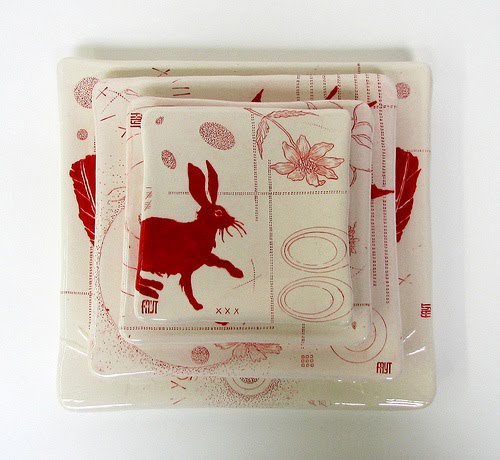
The Clayer: Surfacing
a 6-week e-course with Diana Fayt Registration: $129
(registration ends March 2)
Full details here.

Take my Illustrative Pottery Workshop with the Ceramics School

about me
Follow me on Instagram

Carole’s Website
MAKEANDDO.CA

Web Hosting sponsored by:
