John Balistreri, Professor of ceramics at Bowling Green State University, explains the rapid prototyping process and BGSU’s patented powder and binder solution as well as its applications to art, industry, and medicine. BGSU is the leader in ceramic rapid prototyping and this video showcases some of the work done by students, grad students, and professors from different fields across the arts and academia. For more information On Bowling Green State University visit www.bgsu.edu – For more information on John Balistreri visit www.johnbalistreriartist.com
Greg Payce is recognized internationally for his unique ceramic works combining vase forms with precisely articulated profiles. When properly aligned, illusionary images, most often of human figures, appear in the negative spaces between the vases.
Starting in 2007, the artist began to create large-scale lenticular photographs of major pieces, opening new possibilities for seeing and experiencing the original works. Lenticular photographs incorporate digitally re-mastered images and lenses to create startling three-dimensional illusions. He also began to work with video projected on to moving works, creating mesmerizing sequences that relate decorative motifs found around the globe to contemporary ceramics practice.
In this exhibition, important early works indicating the artist’s growing fascination with image, decoration, history and technology will be displayed in the Focus Gallery amidst the Museum’s rich collection of historical ceramics. Major new works from the last five years will be exhibited in the George R. Gardiner Gallery including original ceramic artworks, lenticular photographs created from these artworks and large-scale video projections. Visitors will experience the work in a variety of arrangements, formats and scales.
This exhibition showcases one of Canada’s most innovative and productive ceramic artists, demonstrating his ongoing commitment to expanding the expressive and conceptual range of ceramic art.
Announcing our newest challenge for the photographers amongst us! … or for a photographer you may know. It could be a famous potter, the local potter around the corner or perhaps someone more personal … like you. Your interpretation can be as broad as your mind will stretch. The Prize: publication of your image (full page) in Issue 51/1 of The Journal of Australian Ceramics (JAC), books to the value of $200 from our online shop or 2 years membership of The Australian Ceramics Association. The choice will be yours. Conditions of Entry:
One entry per photographer
A selection of the best images will be featured in the 50th Anniversary issue of The JAC, Issue 51/1, to be published on 1 April 2012.
Image format: 300 dpi jpg file, minimum size 1MB, maximum size 4MB. DO NOT email tiff files.
Portrait and landscape formats are acceptable, although portrait images (24.5cm X 17cm suit JAC’s format the best).
All photos must be accompanied by the following information: photographers name, potters name, location and date of image.
Photos must have been taken in 2011 or 2012.
There should be no digital manipulation of the image.
By entering the competition, you give The Australian Ceramics Association license to publish the photograph in The JAC and on our website, www.australianceramics.com.
Deadline for images: 30 January 2012.
Images can be emailed to: mail at australianceramics.com with the subject heading SHOOT THE POTTER, or mailed on a disc to SHOOT THE POTTER, PO Box 274 Waverley NSW 2024
Just a word of warning that there may be a few more typos around these parts as I re-adjust to typing with one hand.
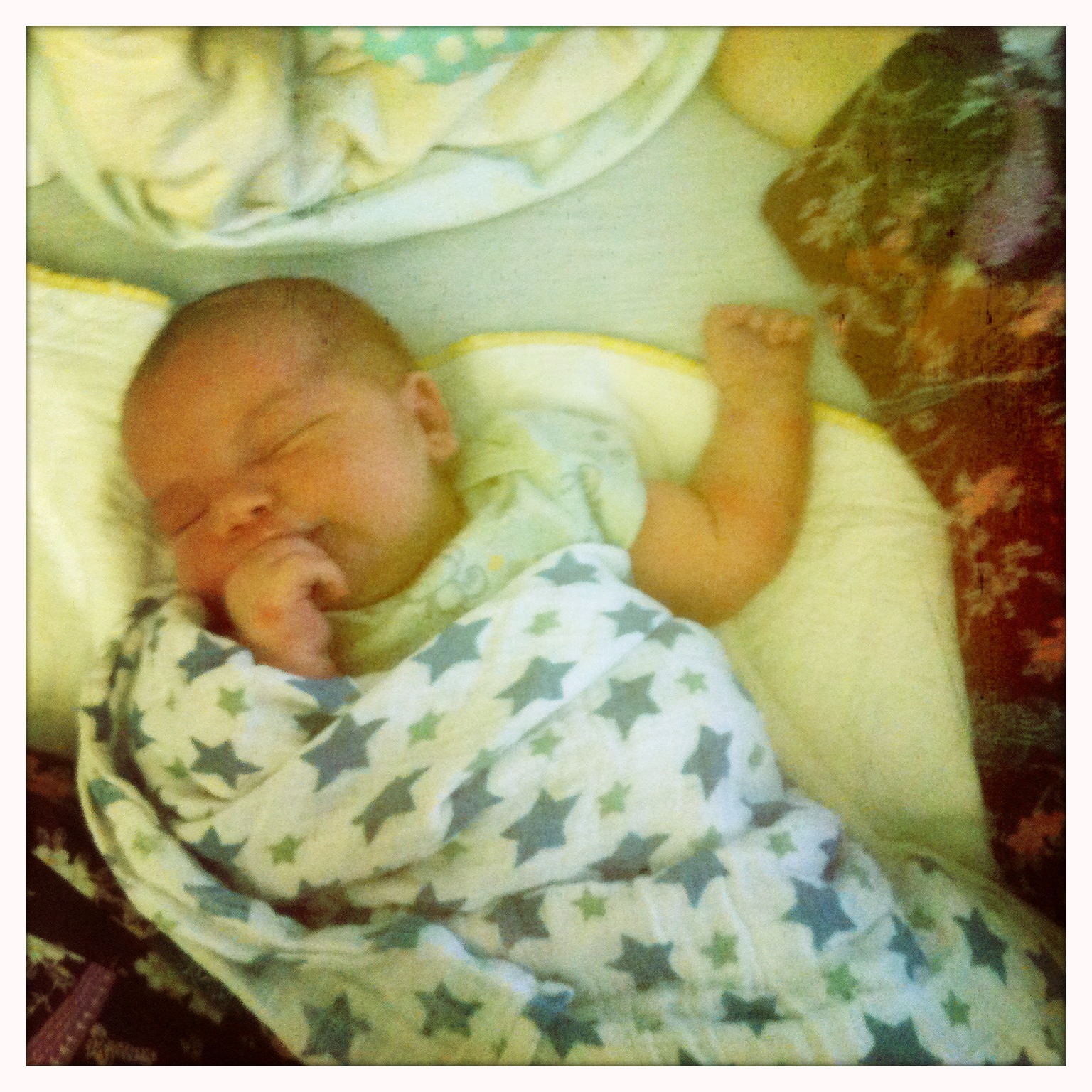
Jasper Arlo Epp, born January 2nd.
Thanks for your patience as I try to get caught up with posts. And thanks to all who have sent their well wishes. I wish I had the time right now to respond to everyone individually. Much love xoxox Carole
craft + design enquiry is pleased to announce a new call for papers for the fifth issue of the journal to be published in 2013.A World in Making: Cities Craft Design Guest Editor, Suzie Attiwill is calling for papers for this on the theme of A World in Making: Cities Craft Design as outlined below.On 12 March 1913, a naming ceremony took place in an empty paddock on a hill. This rural environment was to become a city, the capital city of Australia, the city of Canberra. The aspirations and the projections of the Griffins’ winning design for Canberra are an example of a world-in-making involving the practices of design and craft. This issue of craft + design enquiry will be published in 2013 – 100 years after this event and when, for the first time in history, more than half the world’s population live in cities. By 2030, this will increase to at least 60% with significant growth happening in cities of developing countries and the emergence of meta-cities with 20 million inhabitants. ‘The twenty-first century will be known as the century of the city’.1 This next issue of craft + design enquiry will focus on and highlight the role, contribution and potential of craft and design practices to the urban environment as well as the transformation of these practices – a world in making. ‘The thing is what we make of the world. … Things are our way of dealing with a world in which we are enmeshed rather than over which we have dominion. … It is our way of dealing with the plethora of sensations, vibrations, movements, and intensities that constitute both our world and ourselves’ … ‘We make objects in order to live in the world’.2 Situated in a journal published by Craft Australia, the nuances of craft – a practice which values making and materiality – will guide the selection of papers for publication. This emphasis on craft does not exclude design so much as bring focus to practices of design which engage ideas of making and materiality, where there is a sense of a hand(s) in making, a valuing of haptic encounters and an attention to the relation between people and surroundings. From small to large scale projects, from individuals to communities, an intimate approach to the question of how people inhabit and transform the urban environment is invoked. What are the potentials in this century of the city for craft and design practices? What is the contribution of craft and design to cities and liveability? What might a craft sensibility bring to urban inhabitation? What of an expanded idea of craft practice as a way of working and thinking which addresses spatial and temporal urban conditions? What of the emergence of new forms of practices to engage in the condition of the urban environment and the social, political and cultural forces of the twenty-first century? Academics, practitioners, research students and others are invited to submit research papers and critical project works. A definition of research as ‘the creation of new knowledge and/or the use of existing knowledge in a new and creative way so as to generate new concepts, methodologies and understandings’ 3 is reiterated here to highlight the criticality of ‘new and creative’ in relation to research and to encourage the submission of research through craft and design practice, as well as about craft and design practices situated in a world in making – ‘the century of the city’. Authors are also encouraged to consider the inclusion of visual material as research. This issue of craft + design enquiry will be published in mid-2013. The CDE#5 Call for Papers closes on 30 June 2012.To submit a paper please register online by the closing date of 30 June 2012. Refer to author guidelines for further information.For inquiries relating to this issue or submission of papers, please contact the Guest Editor, Suzie Attiwill Administrative enquiries, please contact Jenny Deves Biographical details of Guest Editor: Suzie Attiwill is Associate Professor and Program Director, Interior Design, RMIT School of Architecture and Design. Suzie has an independent practice involving the design of exhibitions, curatorial work, writing and working on a range of interdisciplinary projects in Australia and overseas. Publications include: ‘Urban and Interior: techniques for an urban interiorist’ Urban Interior. Informal explorations, interventions and occupationsGermany: Spurbuchverlag, 2011; ‘Spatial Relations’ in Making Space: artist run initiatives in Victoria Australia: VIA-N, 2007; co-editor with Gini Lee, ‘INSIDEOUT’ IDEA Journal 2005, Brisbane: QUT Press, 2005. From 1996 to 1999, she was the inaugural Artistic Director of Craft Victoria and editor of Craft. Suzie is the current chair of IDEA (Interior Design/Interior Architecture Educators Association) – www.idea-edu.com, a founding member of the Urban Interior research group – www.urbaninterior.net and a member of the Design Institute of Australia. 1. Tibaijuka, A.K., 2010. Inaugural Address UN Pavilion Lecture Series, Shanghai World Expo 2010 – Better Cities, Better Life. Available at: http://www.unhabitat.org/content.asp?cid=8273&catid=560&typeid=8&subMenuId=0 [Accessed April 24 2011]. Tibaijuka was then Executive Director of UN-HABITAT, the United Nations agency for human settlements. 2. Grosz, E., 2009. ‘The Thing’. In F. Candlin & R. Guins, eds. The Object Reader. London & New York: Routledge, pp. 126 & 128. 3. Australian Research Council March 2011 http://www.arc.gov.au/pdf/2011_presentations/decra0311.pdf. [Accessed 13/04/2011].
All the best to everyone in 2012. Thanks so much for all your support, kind words and friendship over the last year. It has been a fantastic year for me and I hope the same for you. Here’s to 2012 being filled with creativity, deadlines that don’t seem to appear out of nowhere, kilns that fire beautifully every time, work that doesn’t explode, shipping companies that don’t drop things, glazes that make us happy to be alive, and ample time in the studio for everyone.



 It could be a famous potter, the local potter around the corner or perhaps someone more personal … like you. Your interpretation can be as broad as your mind will stretch. The Prize: publication of your image (full page) in Issue 51/1 of The Journal of Australian Ceramics (JAC), books to the value of $200 from our online shop or 2 years membership of The Australian Ceramics Association. The choice will be yours. Conditions of Entry: